
Assessment. Most of the time, we think of quizzes, unit tests, scores, and report cards. For many of us, these have traditionally been how we measure how well a child is doing in school. While these are the best-known ways to measure learning, we believe they are only part of a child’s holistic learning journey.
At Keys, assessment goes beyond determining what students know at a particular moment. It is beyond a letter grade on a report card. It is not a score that alone defines a student’s learning and understanding. It is more about understanding the students’ learning process, recognizing their progress, and identifying the support they need to continue growing. Learning and assessment go hand in hand, happening every day in and out of the classroom.
Understanding Learning beyond the Ratings
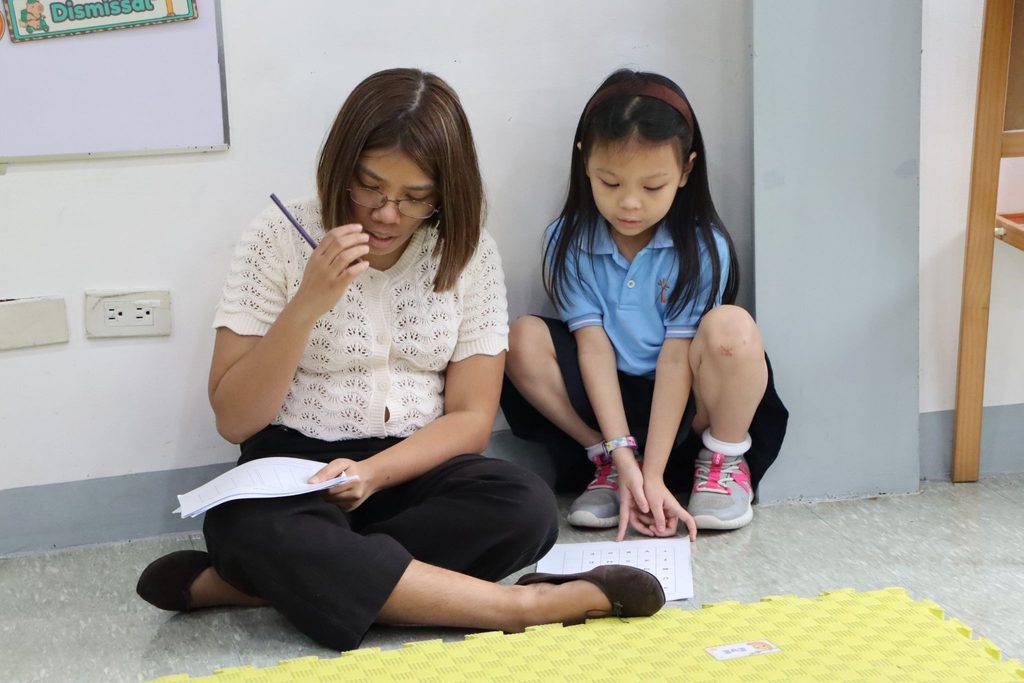
Rather than relying on one measure of achievement, teachers look at different pieces of evidence to build a fuller picture of each learner. Often, learning becomes more visible through thoughtful questions, classroom discussions, creative solutions, or even simple mistakes that lead to a student’s discovery. Assessment does not necessarily mean teachers interpret student understanding through test scores or projects, but they also gather evidence of learning in different ways. Assessment also includes observations of how students approach tasks, share and collaborate with others, show independence in reviewing their work, and apply and transfer what they have learned in new situations. These everyday moments provide valuable insights into each student's developing understanding, skills, and learning habits.
What it Looks Like in the Classroom
Assessment may look different depending on the level, learning goals, and classroom experiences.
In the early years, teachers may observe how children communicate their ideas, find solutions through play, and interact with peers. These observations help teachers recognize emerging skills and plan meaningful experiences moving forward.
In primary and secondary, assessment becomes more visible through different activities. For example, in Social Studies, students might investigate real-world issues, share their perspectives during discussion, or even create projects that show their understanding of important concepts. In Math, it may look like students brainstorming and thinking of a variety of ways to solve a problem, and explaining how they arrived at an answer.
In this way, the teacher not only checks whether the answer is correct, but also observes the thinking process. Simply put, teachers provide a variety of learning experiences to observe how students collaborate, make decisions, respond to challenges, and find solutions, rather than focusing only on the end product. In providing a variety of ways to tackle the concepts learned in class, these experiences allow students to demonstrate learning in ways that go beyond traditional paper-and-pencil tests.
Growing through Feedback
One of the many things Keys takes pride in is that assessment is not only something teachers do for our students. It is also something students actively participate in. Through self-assessments, reflections, and goal-setting, students develop a deeper awareness of their learning. They are guided to ask questions like, “What am I doing well? Where else can I improve? What strategies work for me? What should I work on next?” These opportunities help students become more independent and intentional learners.
For teachers, providing feedback is an opportunity to help students understand where they are in their learning journey and what they can do next. Instead of simply identifying right or wrong answers, teachers provide meaningful feedback that encourages students to revisit their work, reflect on it, and identify strengths and areas for improvement. Conversations may look like, “How can you explain your idea more clearly? Can you think of an example to support your idea? What could you try differently next time?” By asking the students these questions, they are invited to take an active role in improving their work. Over time, students begin to understand that learning is not always about getting things right the first time or getting all answers correct. It is a process of trying, and trying again, reflecting, incorporating feedback, and growing as a learner.
We believe that every learner’s journey is different. Progress is never linear, and it does not look the same for every child. Assessment helps teachers see these differences, respond to students’ needs, and celebrate many ways learning takes shape for every learner.
Ultimately, at Keys, learning is not simply about what a child knows at the end of a lesson, unit, or school year. It is also about how they have grown along the way and how they continue to move forward.
More Stories
October 9, 2026
Growing with Purpose: Mid-Year Goal Setting and Feedback
September 21, 2026
What Learning Looks Like in Our Classrooms
September 2, 2025
Back to School, to Values: Living the Keys Student Profile